
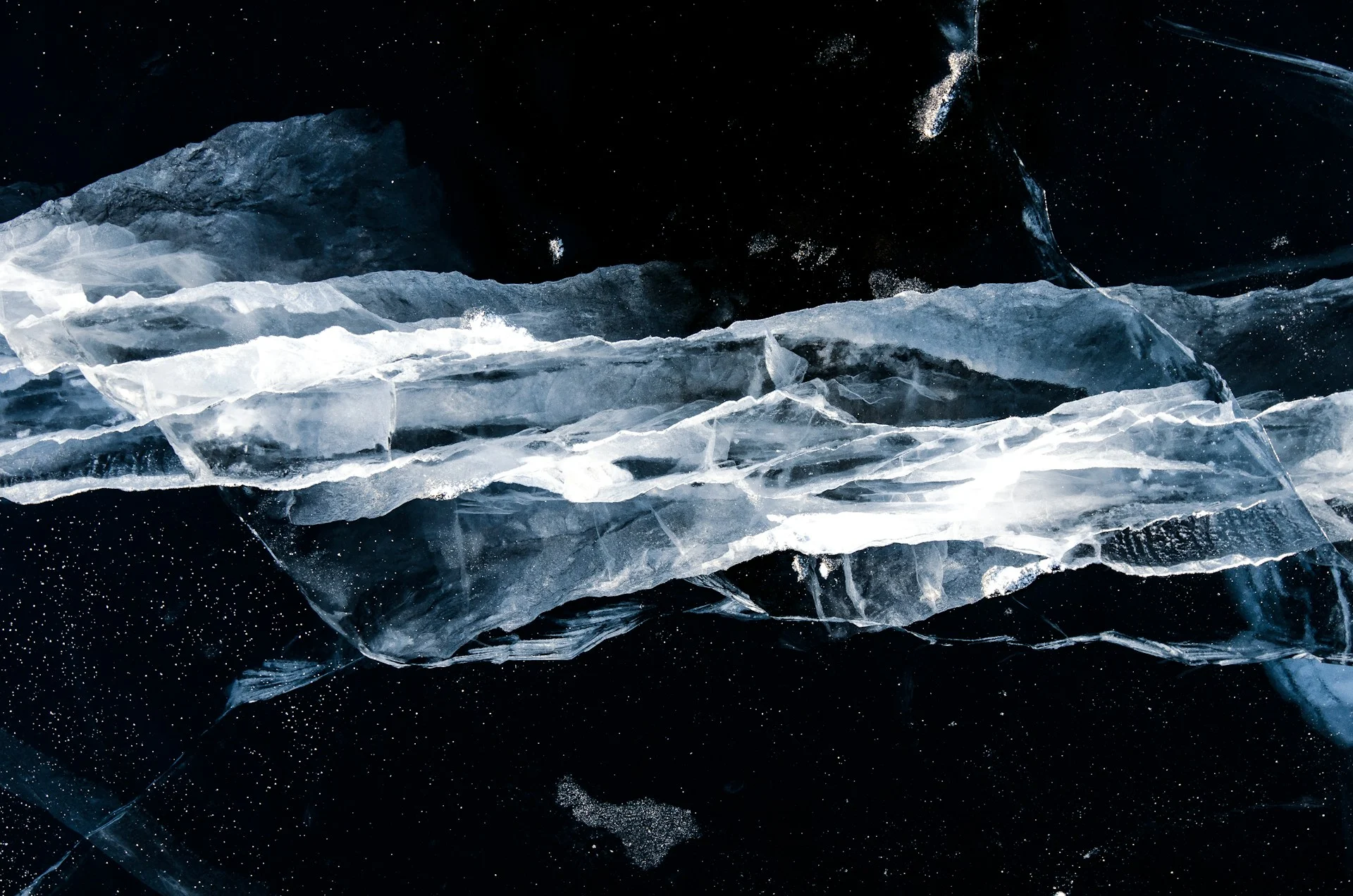
About 20,000 years ago, the Baffin Bay ice shelf was a floating slab of ice more than 1.6 kilometres (a mile) thick. It filled the sea between Canada and Greenland and held three giant ice sheets in place. Then it vanished in as little as 500 years, and the scientists who found it say that is the warning Antarctica needs to hear.
Key takeaways
- A study published in Nature Geoscience on 21 October 2026 describes an ice shelf that covered all of Baffin Bay during the last ice age.
- It was more than 1.6 km thick, at least 0.8 km thicker than any Northern Hemisphere ice shelf known before.
- It held back the Greenland, Innuitian and Laurentide ice sheets. Once it was gone, their ice moved more freely into the sea.
- Sediment cores suggest it disappeared over roughly 500 to 1,000 years.
- Antarctic ice shelves of a similar size do the same job today.
What did scientists find in Baffin Bay?
The paper, led by Shannon Klotsko of the University of North Carolina Wilmington, is titled “The Baffin Bay Ice Shelf stabilized three adjacent ice sheets during the last glacial period.” Co-authors came from the University of Florida, Columbia University and four other institutions.
The team wasn’t looking for an ice shelf at all. As the University of Florida’s release on Phys.org explains, they spent five weeks at sea collecting sediment cores to find out what destabilised the Greenland Ice Sheet at the end of the last ice age. Sonar maps of the seafloor turned up the evidence along the way.
“The thing that really surprised us was this evidence was over a mile deep into the ocean.”
Robert Hatfield, associate professor of geology, University of Florida
Sediment cores from across the bay then dated when the shelf broke up. Hatfield put it simply: “We didn’t go out to look for an ice shelf this big.”
How did one ice shelf hold back three ice sheets?
An ice shelf is the floating part of a glacier or ice sheet, where land ice slides into the sea and keeps going. It sounds fragile. It isn’t. A shelf scrapes against coastlines and shallow seafloor, and that friction pushes back on the ice behind it. Glaciologists call this “buttressing”.
Hatfield’s analogy is a Gothic cathedral. The ice sheets are the walls, and the floating shelves are the flying buttresses that stop them from bowing outward. Take the buttresses away and the walls don’t fall at once, but they start to lean.
Baffin Bay was a perfect spot for this. Three ice sheets drained into it from three sides:
| Ice sheet | Side of Baffin Bay | What it covered |
|---|---|---|
| Greenland Ice Sheet | East | Greenland, and it still survives |
| Innuitian Ice Sheet | North | Canada’s high Arctic islands, including Ellesmere Island |
| Laurentide Ice Sheet | West | Most of mainland Canada and parts of the northern US |
With all three feeding one shelf, the shelf acted as a shared brake. When it went, all three lost some of their grip at the same time.
Why the size and speed of the Baffin Bay ice shelf matter
Scientists already suspected a shelf in the region. A 2022 study in Communications Earth & Environment used moraines (ridges of debris pushed up by ice) to argue for a shelf about 500 metres thick over northern Baffin Bay. The new work makes it far bigger:
- Thickness: more than 1.6 km, roughly three times the 2022 estimate.
- Extent: the whole bay, comparable to some major Antarctic ice shelves.
- Lifespan of the collapse: about 500 to 1,000 years from intact shelf to gone.
Once the shelf was gone, the ice it had held back helped drive the hundreds of feet of sea level rise that followed the last ice age and set the coastlines you know today. Hatfield summed up the physics: “Ice doesn’t want to flow down underwater, it wants to be afloat.”
What does this mean for Antarctica today?
Antarctica is ringed by ice shelves that brace its glaciers in exactly the same way. We have already watched a small version of the Baffin Bay story play out there.
Between 31 January and 7 March 2002, the Larsen B ice shelf on the Antarctic Peninsula shattered, and about 3,250 square kilometres of ice broke away. According to NASA Earthdata, the Crane Glacier behind it thinned by 16 to 150 metres over the next five years and its front retreated by tens of kilometres. Glaciers still braced by the shelf’s remnant barely changed.
The bigger worry is Thwaites Glacier in West Antarctica. Science News reported in December 2021 that Thwaites accounts for about 4% of global sea level rise and that its eastern ice shelf was cracking as warm water ate it from below. A floating shelf adds almost nothing to sea level when it melts, because it is already in the water. The danger is the land ice it releases.
Not every model agrees on how fast that happens. Some modelling suggests that losing the Thwaites shelf would not greatly change the glacier’s ice loss over the next 50 years. That is why a real, dated example of a giant shelf disappearing is so useful. Hatfield called it a “scary takeaway”: “an ice shelf the scale of the ones in Antarctica could completely disappear in a matter of centuries.”
Our take: “centuries” can sound reassuring. It shouldn’t. Ports, cities and coastal farmland are built to last that long, and Baffin Bay’s shelf broke up without any help from humans.
What happens next
The authors expect their data to feed straight into ice sheet models. Models of ice shelves have been tuned mostly against a few decades of satellite records. Baffin Bay gives them a full collapse, start to finish, to test against. The team has also released the sea level code used in the paper so others can check the work.
Look for future studies to test whether Antarctic models can reproduce a 500-to-1,000-year breakup of a shelf this size. If they can’t, their projections for the next few centuries may be too slow. For more on how polar change feeds back into the climate, see our piece on Arctic fires and permafrost carbon and the latest New Zealand climate report.
FAQ
What was the Baffin Bay ice shelf?
It was a floating ice shelf more than 1.6 km thick that filled Baffin Bay, between Canada and Greenland, about 20,000 years ago. It held back the Greenland, Innuitian and Laurentide ice sheets.
Does a melting ice shelf raise sea level?
Hardly at all, because it already floats. The problem is that without the shelf, the glaciers on land behind it flow faster into the ocean, and that land ice does raise sea level.
Could Antarctic ice shelves vanish the same way?
The study shows that a shelf the size of major Antarctic ones disappeared within 500 to 1,000 years. It doesn’t predict a date for Antarctica, but it gives modellers a real example to test their forecasts against.
Next time a headline says an Antarctic ice shelf is cracking, check which glaciers sit behind it. That’s where the sea level story starts.
1 comment