
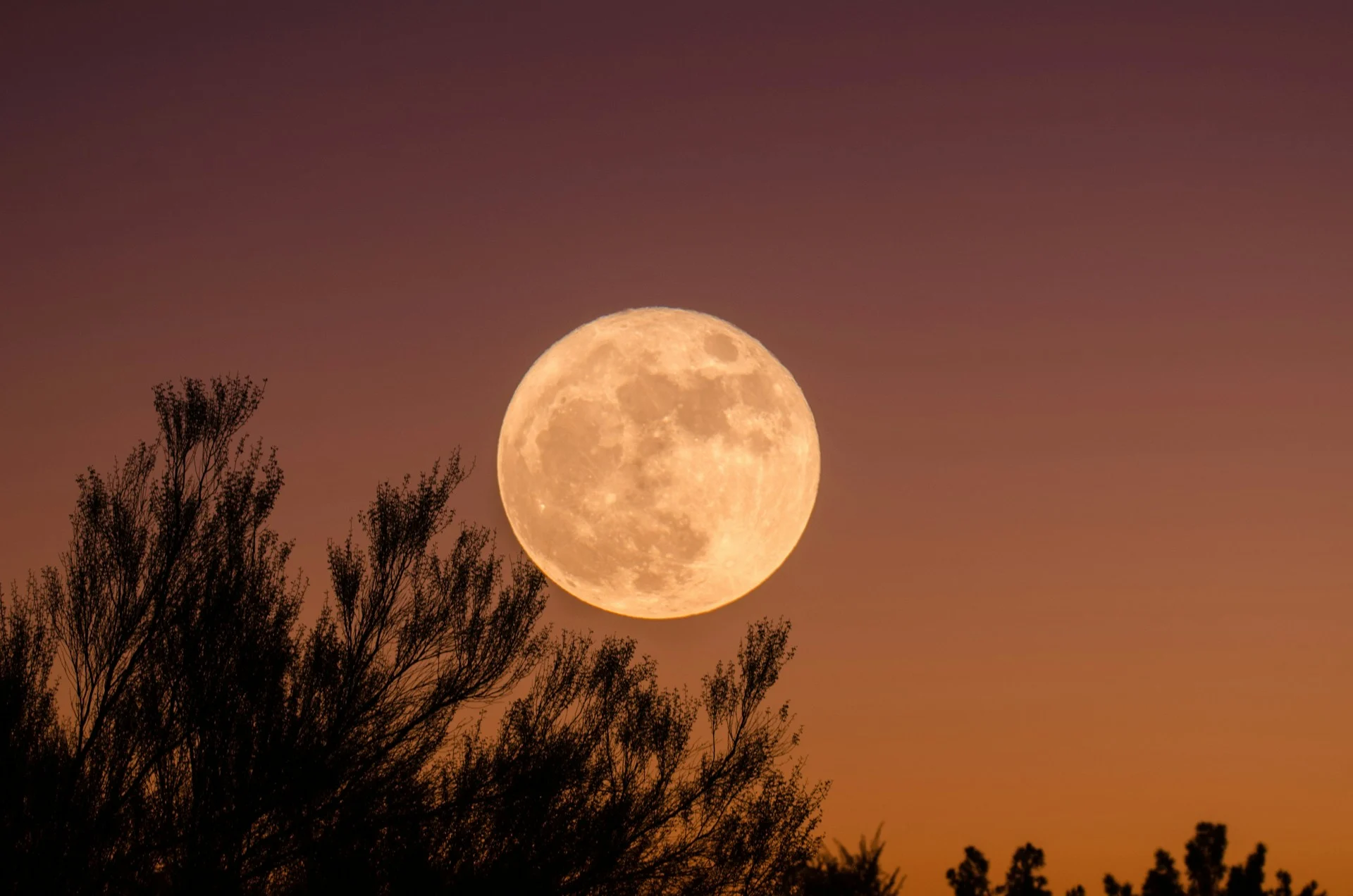
Is it a full moon tonight? If you’re asking in late October 2026, you’ve just missed the exact moment: the Hunter’s Moon peaked at 04:12 GMT on Monday 26 October 2026, but it looked full for a night or two either side of that.
Around 2,000 people in the UK searched the question in a single day, and that’s no surprise. Photos of the bright orange moon were everywhere, and the clocks went back the same weekend. Here’s what happened, why the moon fooled you, and when the next full moons are.
Key takeaways
- The October 2026 full moon, the Hunter’s Moon, peaked at 04:12 GMT on 26 October 2026.
- It looked full from roughly 25 to 27 October.
- The next full moon is the Beaver Moon on 24 November 2026, and it’s a supermoon.
- December’s Cold Moon on 24 December 2026 is the last supermoon of the year.
Is it a full moon tonight, or did I just miss it?
Strictly speaking, a full moon is an instant, not a night. It’s the moment the moon sits directly opposite the Sun, with Earth in between, so the side facing us is fully lit.
For October 2026, that instant came at 04:12 GMT on 26 October, according to Star Walk, which gives the same moment as 12:12am EDT in New York. The Old Farmer’s Almanac agrees to within a minute.
Here’s the catch. Your eyes can’t tell 100% lit from 98% lit. So the moon looked full on the evenings of 25, 26 and even 27 October. If you looked up and saw a bright round disc, you weren’t wrong. You were just slightly early or late.

Why is it called the Hunter’s Moon?
The Hunter’s Moon is the first full moon after the Harvest Moon. The Harvest Moon is whichever full moon falls closest to the autumn equinox. In 2026 that was September’s, so October’s took the Hunter’s name.
The name comes from Northern Hemisphere folklore. Fields had been cleared, animals were fattened for winter, and the bright moonlight gave hunters extra hours to work after sunset.
Some coverage mixed the two names up. The Scotsman, for example, called this moon the Harvest Moon. The usual convention, the one most almanacs follow, keeps “Harvest” for September in 2026 and “Hunter’s” for October.
Did the clocks going back confuse things?
A little. UK clocks went back an hour on Sunday 25 October 2026, moving from British Summer Time to GMT. The peak landed a day later, at 4:12am on Monday.
That meant the best viewing in Britain was Sunday evening, 25 October. The moon rose around dusk, glowed orange near the horizon and stayed up all night. Monday’s exact peak happened while most people were asleep.
Why orange? Near the horizon, moonlight passes through far more air before it reaches you. The air scatters away the blue light and leaves the reds and oranges. It works like a sunset, only with reflected light.
When are the next full moons in 2026?
Two more full moons are left in 2026, and both are supermoons. A supermoon is a full moon that happens when the moon is near perigee, the closest point in its slightly oval orbit around Earth.
| Name | Date | Peak (GMT) | Supermoon? |
|---|---|---|---|
| Hunter’s Moon | 26 October 2026 | 04:12 | No |
| Beaver Moon | 24 November 2026 | 14:53 | Yes |
| Cold Moon | 24 December 2026 | 01:28 | Yes, the year’s last |
The Beaver Moon date and time come from the Farmers’ Almanac. In the UK, the peak at 14:53 is in daylight with the moon below the horizon, so the evenings of 23 and 24 November are your best bets.

Star Walk says the November supermoon looks about 6.5% larger and 13.5% brighter than an average full moon. Be honest with yourself here: you probably won’t notice the size difference without a side-by-side photo. You may notice the brightness, though. My view? Supermoons are worth stepping outside for, but the hype oversells them.
How can you check if it’s a full moon tonight?
You don’t need to guess. Here are three quick ways:
- Use a moon phase tool. Sites such as the Old Farmer’s Almanac’s next-full-moon page show the exact date and time.
- Check the illumination percentage. Anything above about 97% will look full to the naked eye.
- Watch moonrise. A full moon rises around sunset, opposite the Sun. If a round moon is coming up in the east as the Sun sets, you’ve got one.

Weather matters more than any of this. A UK night with clear skies and a waxing gibbous moon beats a cloudy full moon every time. If you’re kitting out for long, dark winter evenings, our guide to wind-up radios and the UK’s 3-day kit advice is a handy companion read.
What happens next
After the Hunter’s Moon, the moon wanes. It reaches new moon in early November 2026, which is your darkest window for spotting stars and meteors. Then it builds again to the Beaver supermoon on 24 November.
December closes the year with the Cold Moon, which peaks at 01:28 GMT on 24 December 2026, according to Star Walk. It’s the last supermoon of 2026. So on Christmas Eve, look up as well as down the chimney.
FAQ
When was the full moon in October 2026?
The Hunter’s Moon peaked at 04:12 GMT on Monday 26 October 2026. It looked full from about 25 to 27 October.
When is the next full moon after the Hunter’s Moon?
The Beaver Moon on Tuesday 24 November 2026, peaking at 14:53 GMT. It is a supermoon.
How long does a full moon last?
The exact full moon is a single instant. To the naked eye, though, the moon looks full for roughly two to three nights around that moment.
Your next step: put 23 and 24 November 2026 in your calendar, check the forecast that afternoon, and find a spot with a clear view of the eastern horizon at sunset.
Leave a comment