
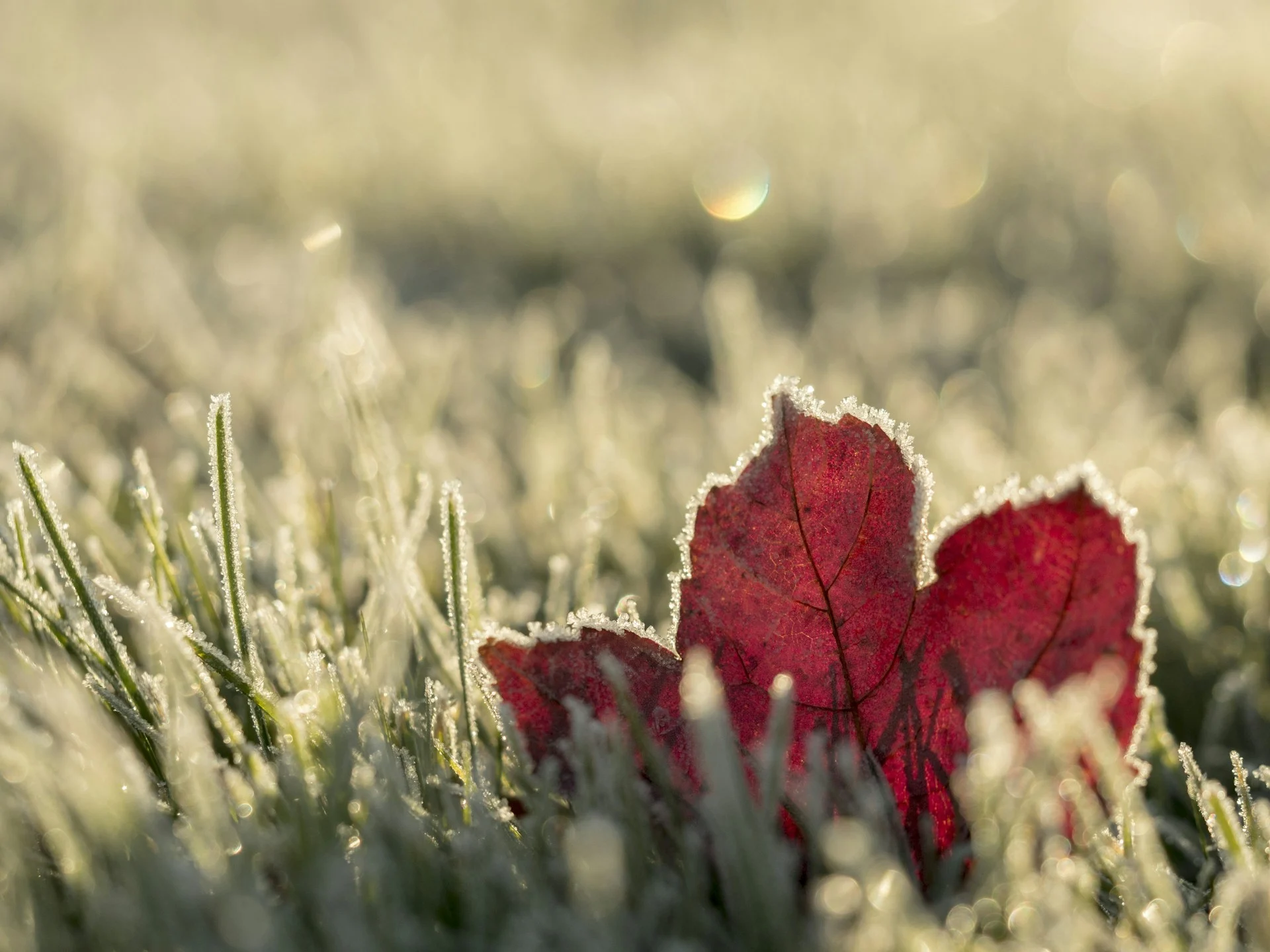
Frost’s Descent, the last of autumn’s six solar terms in the Chinese calendar, began on 23 October 2026 at 09:37 UTC, which is 17:37 Beijing time. The name promises frost falling from the sky. Frost never falls, and the 2,000-year-old calendar behind the name runs on precise astronomy, not on the weather.
Key takeaways
- Frost’s Descent (霜降, shuāngjiàng) starts when the Sun reaches 210° of celestial longitude. In 2026 it runs from 23 October to 7 November.
- It is the 18th of the 24 solar terms, a system UNESCO added to its intangible heritage list in 2016.
- Real first frosts in China range from late August in the far north to January near Guangzhou.
- Frost forms in place, straight from water vapour into ice. It doesn’t “descend”.
- Persimmons, chrysanthemums and duck are the season’s best-known traditions.
What is Frost’s Descent, and why does it start at 210°?
The 24 solar terms split the Sun’s yearly path across the sky into 24 slices of 15° each. A new term begins each time the Sun crosses one of those lines. Frost’s Descent starts at 210° and ends at 225°, where the Start of Winter takes over.
Because the terms follow the Sun rather than the Moon, they land on almost the same Western dates every year. Wikipedia’s table of Shuangjiang start times, built from NASA JPL’s Horizons ephemeris, puts every start between 22 and 23 October UTC from 2020 to 2030. Only the hour moves, by roughly six hours a year, and it resets every leap year.
Think of it as a clock face drawn on the sky. The lunar calendar decides when festivals like Chinese New Year fall. The solar terms told farmers when to plant and harvest. UNESCO’s 2016 inscription notes that they still guide farming practice in parts of China.
Does frost actually “descend”?
No. The ancient name describes how frost looked, not how it forms. According to the US National Weather Service’s training notes on dew and frost, white frost forms by deposition: water vapour turns straight into ice on a cold surface, with no liquid step in between.
Here is how it happens. On a clear, calm night the ground loses heat to the sky. Grass and car roofs cool faster than the air around them. Once a surface drops to the frost point (the temperature at which air is saturated over ice) and is at or below 0°C, feathery crystals grow on it.
A second, duller kind called frozen dew forms when dew settles first and then freezes. It looks glassy and has none of those fern-like crystal patterns.
One surprise: you can find frost on your lawn when the forecast low was 3°C. Weather stations measure the air about 1.2 to 1.5 metres up, and on still nights the layer hugging the ground can be several degrees colder.
When does the first frost really arrive in China?
The calendar gives one date, but China spans about 50 degrees of latitude. As IT之家 pointed out in its 23 October 2026 piece on the term, the gap between regions is months, not days.
| Region | Typical first frost |
|---|---|
| Northern Greater Khingan Range | Late August |
| Lower Yellow River region | Late October to early November |
| Shandong province | Early November |
| Guangzhou area | Early January |
Meteorologists call the first autumn frost the “early frost” and the last spring frost the “late frost”. The stretch between them is the frost-free period, which sets the length of the growing season. An old farm saying warns, “Late rice fears an early frost.” The earlier it comes, the more damage it does.
The Yellow River timing matches the calendar fairly well, which is no accident. The solar terms grew up in that northern farming heartland. In my view, that explains why the names feel early or late everywhere else.
The three pentads: an ancient nature diary
Each term is split into three five-day “pentads”, each named after something you could see happen. For Frost’s Descent:
- Dholes offer up their prey. Wild dogs hunt hard and lay out their catch, read in old texts as an offering to heaven.
- Plants yellow and shed their leaves.
- Insects go dormant. Hibernating bugs stay in their burrows, stop eating and lie still.
Long before anyone used the word “phenology” (the study of when natural events happen each year), this was a field guide to the seasons.
Why do people eat persimmons at Frost’s Descent?
Partly timing: persimmons ripen in late October. Partly folklore: a popular saying claims that persimmons at Frost’s Descent keep a runny nose away. Treat that as tradition, not medicine.
The Shanghai government’s seasonal guide and IT之家 list a few other customs:
- Duck: In southern Fujian and Taiwan, people eat duck on the first day of the term to “store energy” for winter.
- Chrysanthemum viewing: Beijing’s scholars once held flower gatherings at spots such as Taoranting.
- Sending off the taro ghost: In Gaoming, Guangdong, villagers heat a small tile tower until it glows, cook taro in it, then throw the tiles outside the village to chase away bad luck.
- The Frost’s Descent Festival: In Daxin County, Guangxi, Zhuang communities mark the first day with sacrifices, dances and folk songs. UNESCO’s record names this festival as one tied to the solar terms.
What happens next
Frost’s Descent lasts until the Sun reaches 225°, at 09:52 UTC on 7 November 2026 (17:52 Beijing time). That moment begins the Start of Winter (立冬), the first of six winter terms ending with Greater Cold in late January.
In the southern hemisphere the same sky clock points the other way. New Zealand is heading into summer, and our look at its latest climate report shows how warm that season could run. The calendar is a northern one. The astronomy belongs to everyone.
FAQ
When is Frost’s Descent in 2026?
It began on 23 October 2026 at 09:37 UTC (17:37 Beijing time) and runs until the Start of Winter on 7 November 2026.
Is Frost’s Descent the same date every year?
Almost. Because it follows the Sun’s position at 210°, it always falls on 23 or 24 October in China (22 or 23 October in UTC). Only the hour changes.
Can frost form when the temperature is above freezing?
The surface itself must be at or below 0°C, but the official air reading taken about 1.5 metres up can be a few degrees warmer on clear, calm nights.
Next clear, still morning, check the grass before the thermometer: if you see feathery crystals, you’re watching deposition in action, and the 2,000-year-old calendar got it right.
Leave a comment