
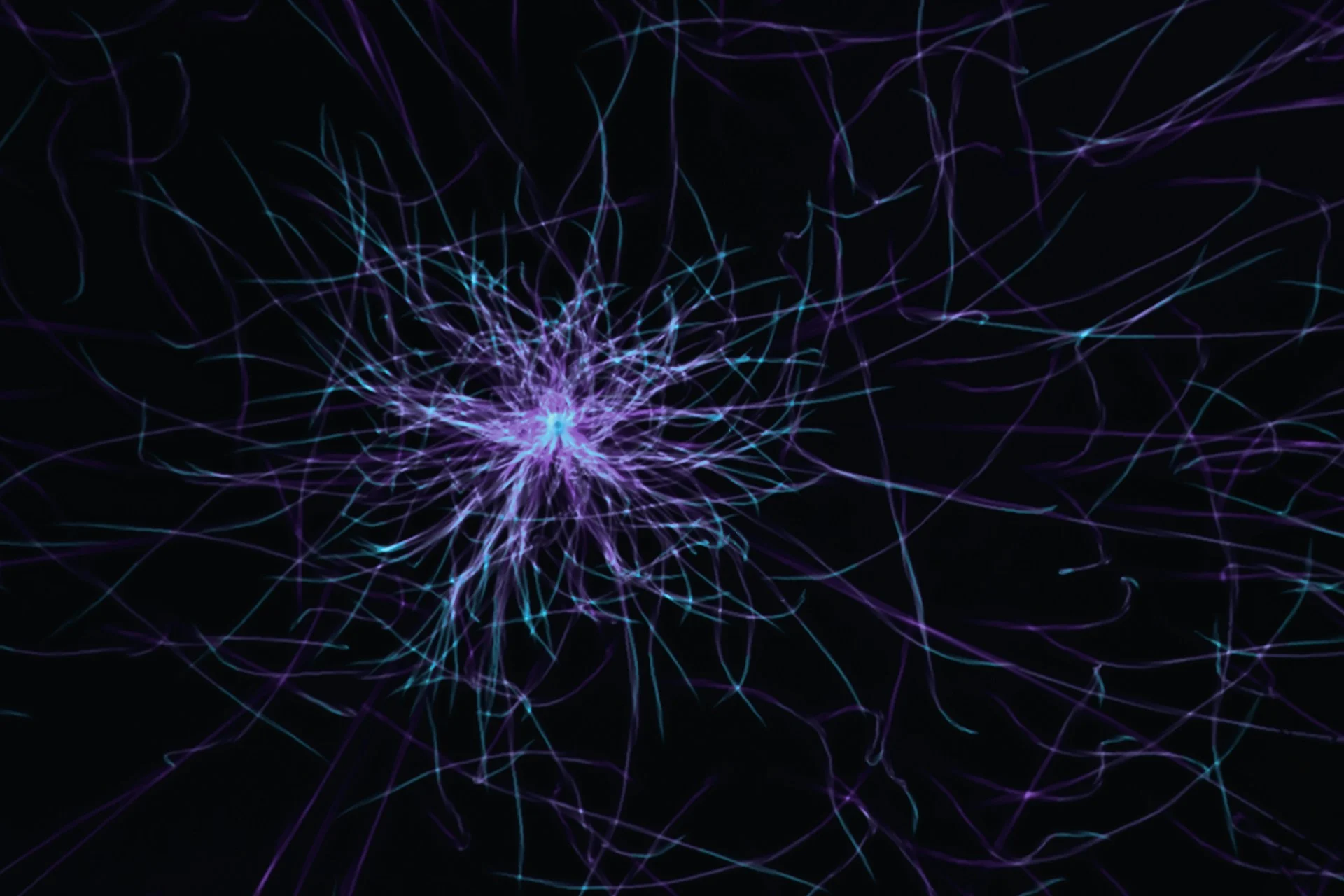
NeuronDump is a new open-source tool that opens a local language model as an interactive 3D graph, lets you cut out layers, attention heads or whole experts, and tells you whether the model will still load. It was shared on Hacker News on 25 October 2026 and is, by its own description, an early version.
Think of it as an anatomy lab for the models you already run in Ollama or llama.cpp: you see the parts, poke them, and learn which ones the model can live without.
Key takeaways
- NeuronDump works on GGUF files, the format used by Ollama and llama.cpp, and is released under the MIT license.
- It labels each part of a model
safe,riskyorbreaks_model, with a reason. - You can cut parts, then see parameters removed, file size change and whether llama.cpp still loads the result.
- An optional trace build compares the cut model with the original using KL divergence and perplexity.
- The project is young: tested on Windows with Ollama models, with known gaps listed in its TEST.md.
What is NeuronDump and what does it do?
According to its GitHub page, NeuronDump is meant to “look inside any local LLM, find the parts it doesn’t need, and make it smaller.” It reads a model’s own metadata instead of relying on per-model rules, so the aim is to work with any GGUF file.
Out of the box it reports layers, attention heads, vocabulary, the chat template and weight statistics. The author is listed as aymen94. At the time of writing the repository had 7 commits and 3 stars, so treat it as a fresh experiment, not an established project.
How does the 3D graph work?
The web interface shows the model in 3D or 2D. You start at the layer level and open a layer into its attention block and feed-forward block. From there you can go down to individual heads, buckets of neurons, or mixture-of-experts (MoE) experts, the specialist sub-networks some models route tokens to.
You can also search tensors by name and click any part to see its size, contents, connections and weight statistics. The interface is bundled with the tool and works offline, which suits people who run local models precisely to avoid the cloud.
If you want a gentler way to learn what those blocks are, Brendan Bycroft’s llm-viz animates a small GPT-style network in 3D. It is a teaching tool, though, not one that edits your model.
What happens when you cut a part?
This is the feature in the title. Select a part, cut it, and NeuronDump shows the direct impact: parameters removed, file size saved, which other parts depend on it, and whether llama.cpp can still load the file. Dangerous cuts are refused unless you force them.
Loading is a low bar, though. A file can load and still produce nonsense. That is where the optional trace build helps: it runs the cut model next to the original and compares outputs, KL divergence (how far the two probability distributions drift apart) and perplexity (how surprised the model is by text), without writing anything to disk.
What can you actually do with it?
| Task | What NeuronDump gives you |
|---|---|
| Inspect | Layers, heads, vocabulary, chat template, weight stats |
| Explore | 3D or 2D graph down to heads, neuron buckets and MoE experts |
| Judge risk | safe, risky or breaks_model labels with reasons |
| Test a cut | Parameters removed, size saved, dependencies, load check |
| Compare quality | KL divergence and perplexity versus the original (trace build) |
| Rank damage | Sweeps over layers or heads, ordered by harm |
| Export | A smaller GGUF plus an Ollama Modelfile |
The commands include list, inspect, vocab, template, analyze, slim and web. Run neurondump with no arguments and it asks whether you want the CLI or the web interface. Prebuilt Windows and Linux builds exist, or you can build from source with Rust 1.88 or newer.
Why does cutting a model not break it as badly as you would expect?
Research on ablation (removing a component to see what changes) suggests models are surprisingly forgiving. A DeepMind observation known as the Hydra effect found that when one layer of attention heads is removed, a later layer can take over part of its job. A paper by Rushing and Nanda on self-repair in language models found repair across many model families and sizes when single heads are ablated, though it is partial and varies a lot by prompt.
That cuts both ways. Redundancy is why trimming can work at all. It also means a quick test on a few prompts can understate the damage, because the model compensates on some inputs and not others. This is my opinion, not a NeuronDump claim: trust a sweep over many prompts far more than a single chat that “seemed fine”.
What are the limits right now?
The README calls this an early version, tested on Windows with Ollama models. It names no compatibility list; its examples include llama3.2:1b and its docs mention Qwen3 8B and DeepSeek-R1. The page shows no release date, and the known gaps are listed at the end of TEST.md in the repository.
The “safe” label also deserves caution. It describes structure and statistics, and the tool cannot know whether your task depends on a head that looks unimportant on average. Run the trace comparison on text from your own use case before you keep a slimmed model.
For related reading on making models cheaper to run, see our pieces on DeepSeek’s open-source inference engine and on profiling that cut Trainium time by 6x.
What happens next
The project has little community yet, with 3 stars, 0 forks and 0 watchers when captured, so its future depends on whether people try it and report which architectures break. The obvious next steps are broader platform testing and a clearer model compatibility list, both hinted at by the TEST.md gaps. Nothing about a roadmap has been announced.
FAQ
Does NeuronDump change my original model file?
Cuts are previewed first, and the trace comparison writes nothing. The slim step produces a new, smaller GGUF plus an Ollama Modelfile, so your original is not the output target.
Which models does it support?
It targets any GGUF model by reading the file’s own metadata. The README gives no formal list, and it was tested on Windows with Ollama models, so expect rough edges elsewhere.
Is it free?
Yes. It is MIT licensed. You can download Windows and Linux builds or compile it with Rust 1.88 or newer.
Next step: pick a small model such as llama3.2:1b, open it in NeuronDump, and sweep its layers to see which ones hurt most. Then tell us what broke.
Leave a comment